
How I Create Dramatic Fire Portraits (Without Burning Down My Studio)
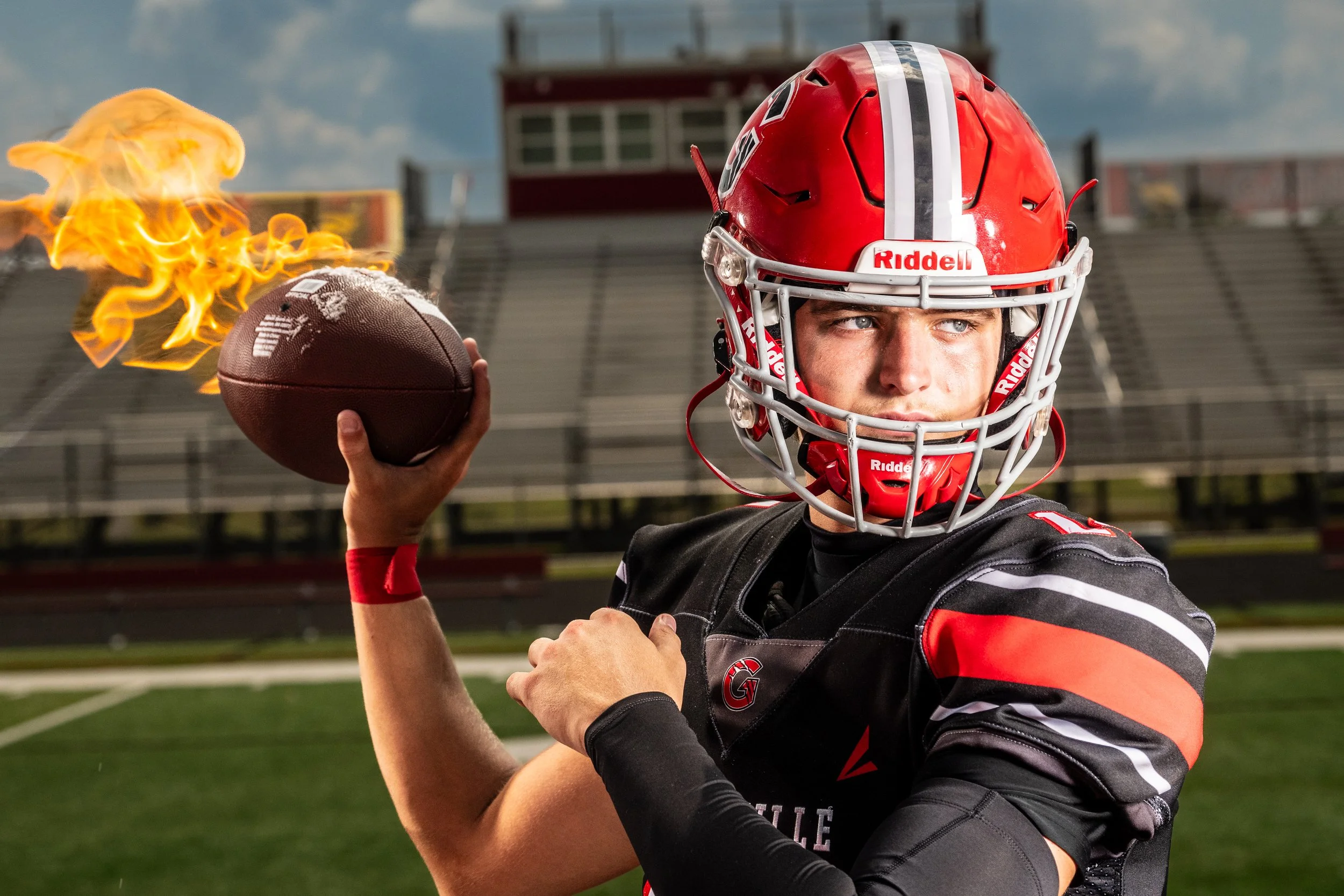
One of the most common questions I receive from photographers is:
"How do you create those fire portraits?"
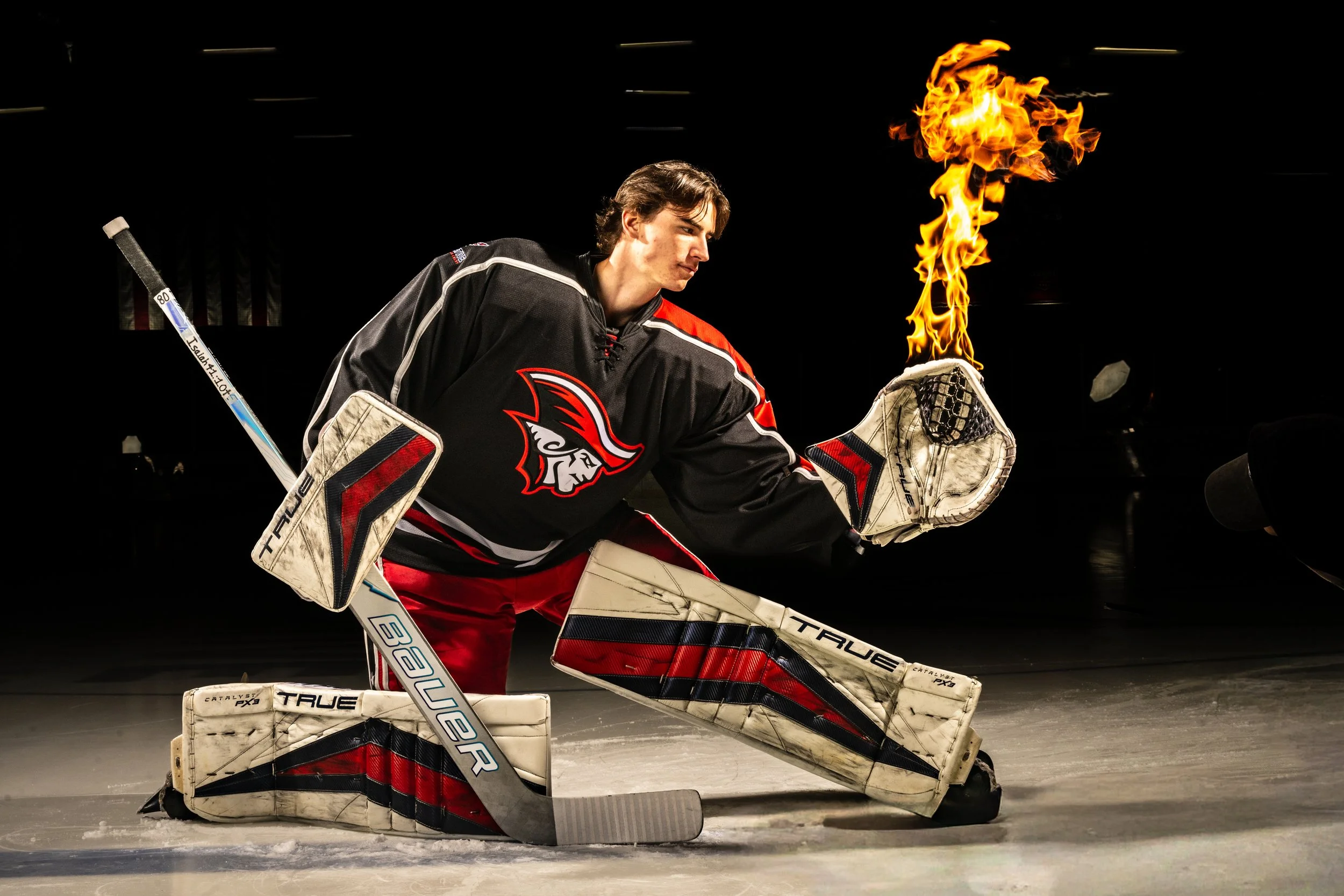
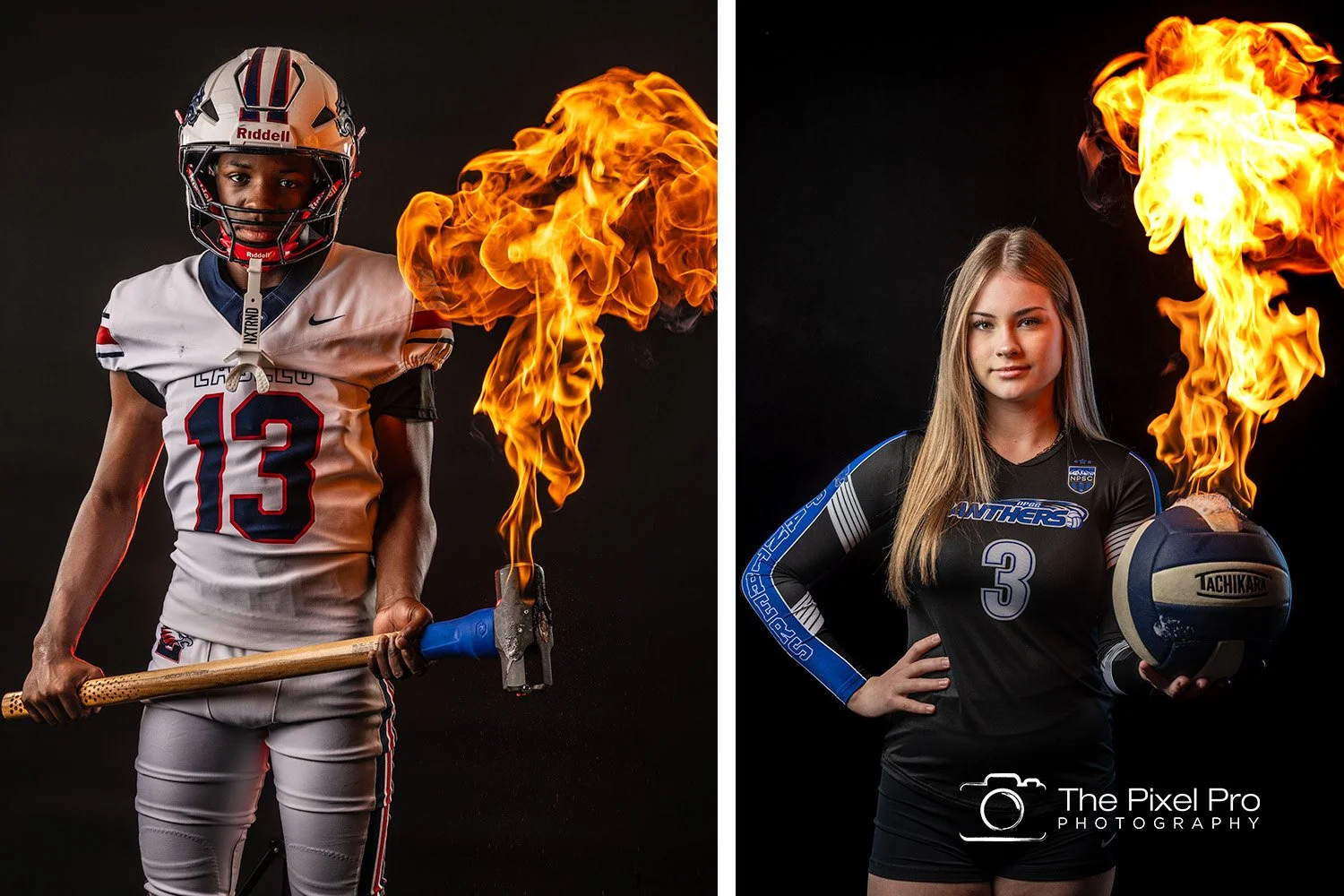
If you've seen some of my sports portraits, you've probably noticed them. Flaming footballs. Burning baseballs. Volleyballs surrounded by fire. Dramatic images that look like they belong on a movie poster.
The answer surprises a lot of people.
It's real fire.
That usually leads to a second question:
"Wait... is that safe?"
The short answer is yes, when it's done correctly.
The longer answer is that what I'm creating isn't a stunt. It's a controlled practical stage effect that I've refined over hundreds of athlete sessions.
It Started Long Before Sports Photography
Long before I was creating sports portraits, I was a film student at the University of Central Florida.
One of the classes that had the biggest impact on me wasn't focused on computers or animation. It was a practical effects class.
The instructors believed that before you use computers to create visual effects, you should understand how visual effects were created before computers existed.
We studied forced perspective, in-camera tricks, miniatures, projection effects, and all kinds of creative problem solving.
That philosophy stuck with me.
Even now, decades later, I still enjoy finding practical solutions whenever possible.
Why Not Just Use Photoshop?
The funny thing is that I absolutely could create many of these images entirely in Photoshop.
In fact, I often use Photoshop to enhance the final image.
But I've discovered something over the years:
The fire effect isn't just creating a photograph.
It's creating an experience.
Athletes remember holding a flaming football.
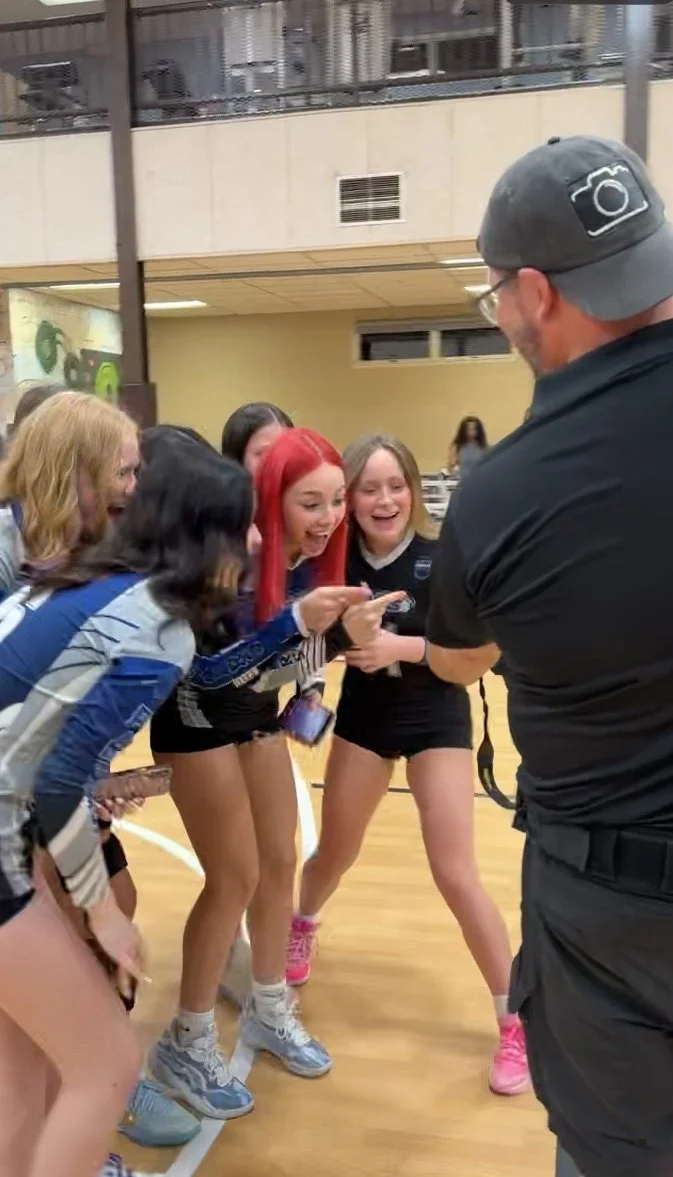
They remember everyone gathering around the monitor to see if we got the shot.
They remember the anticipation right before the flame ignites.
The final image becomes a souvenir from the experience.
That's something Photoshop can't create.
The Biggest Misconception About Fire Portraits
Most photographers assume one of two things when they first see these images.
The first assumption is that they're heavily composited in Photoshop.
The second assumption is that the process is dangerous.
In reality, neither is true.
The technique I use is designed around control and repeatability. The flame is brief, predictable, and carefully managed throughout the session.
The goal isn't to create the biggest possible fireball.
The goal is to create a dramatic portrait safely and consistently.
One phrase appears throughout my guide because it perfectly summarizes my approach:
Respect the Physics.
Understanding how the effect behaves is what makes it safe.
Building the Portrait First
One of the biggest mistakes photographers make when experimenting with special effects is allowing the effect to become the entire photograph.
I approach it the opposite way.
I build the portrait first.
The pose comes first.
The lighting comes first.
The expression comes first.
Only after all of that is working do I introduce the fire.
The athlete is still the subject.
The fire is simply an accent that helps tell the story.
Why Athletes Love It
This is probably the most unexpected part of the process.
Parents often think the athletes will be nervous.
The reality is usually the opposite.
Once they understand what's happening and see a demonstration of the effect, most athletes get excited.
They start offering ideas.
They want to see the images.
They become invested in creating something unique.
Many of my clients still talk about those sessions years later.
Not because of the Photoshop.
Because of the experience.
Want to Learn the Complete Process?
After years of answering the same questions over and over, I finally decided to document the entire workflow.
The result is my guide:
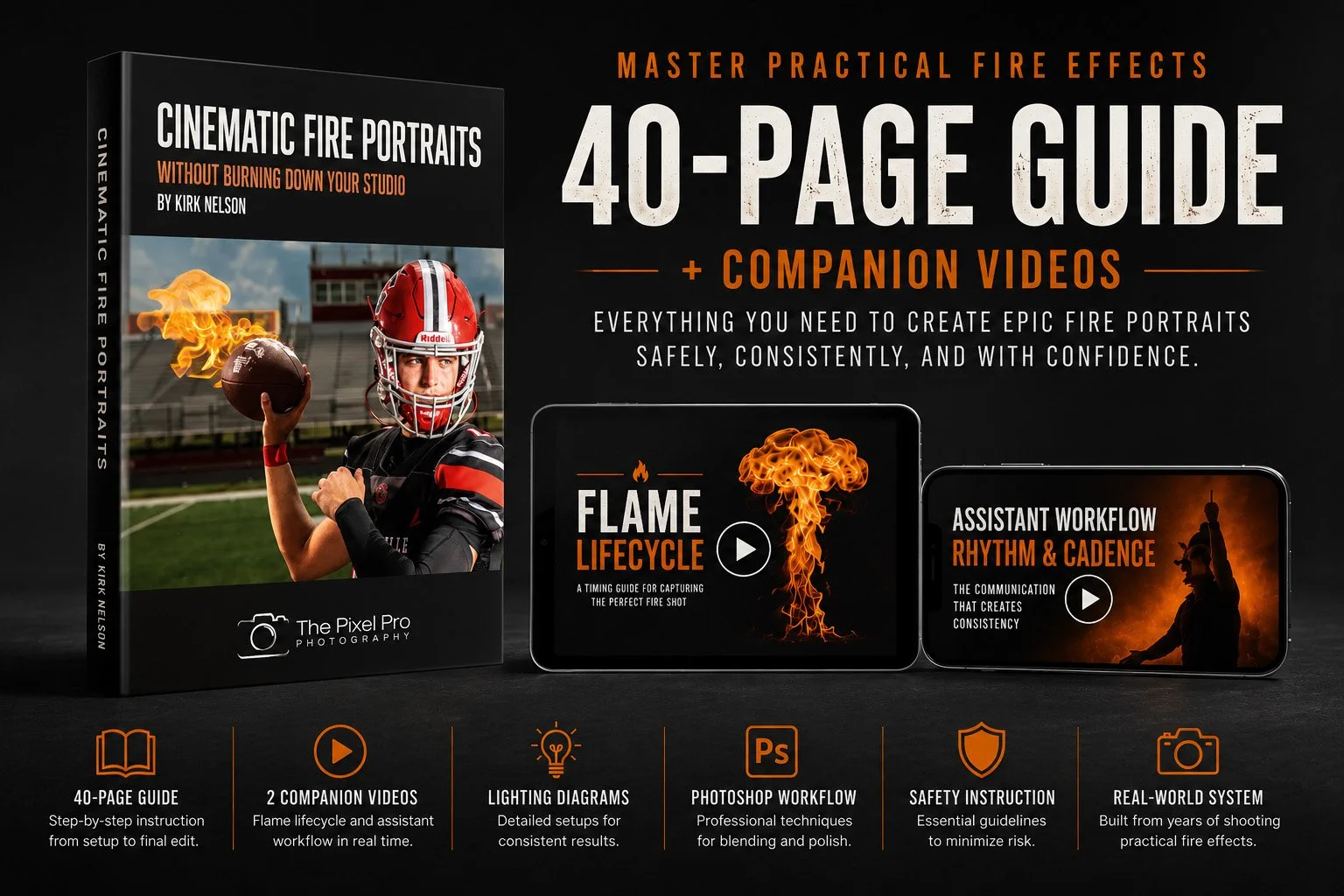
Cinematic Fire Portraits Without Burning Down Your Studio
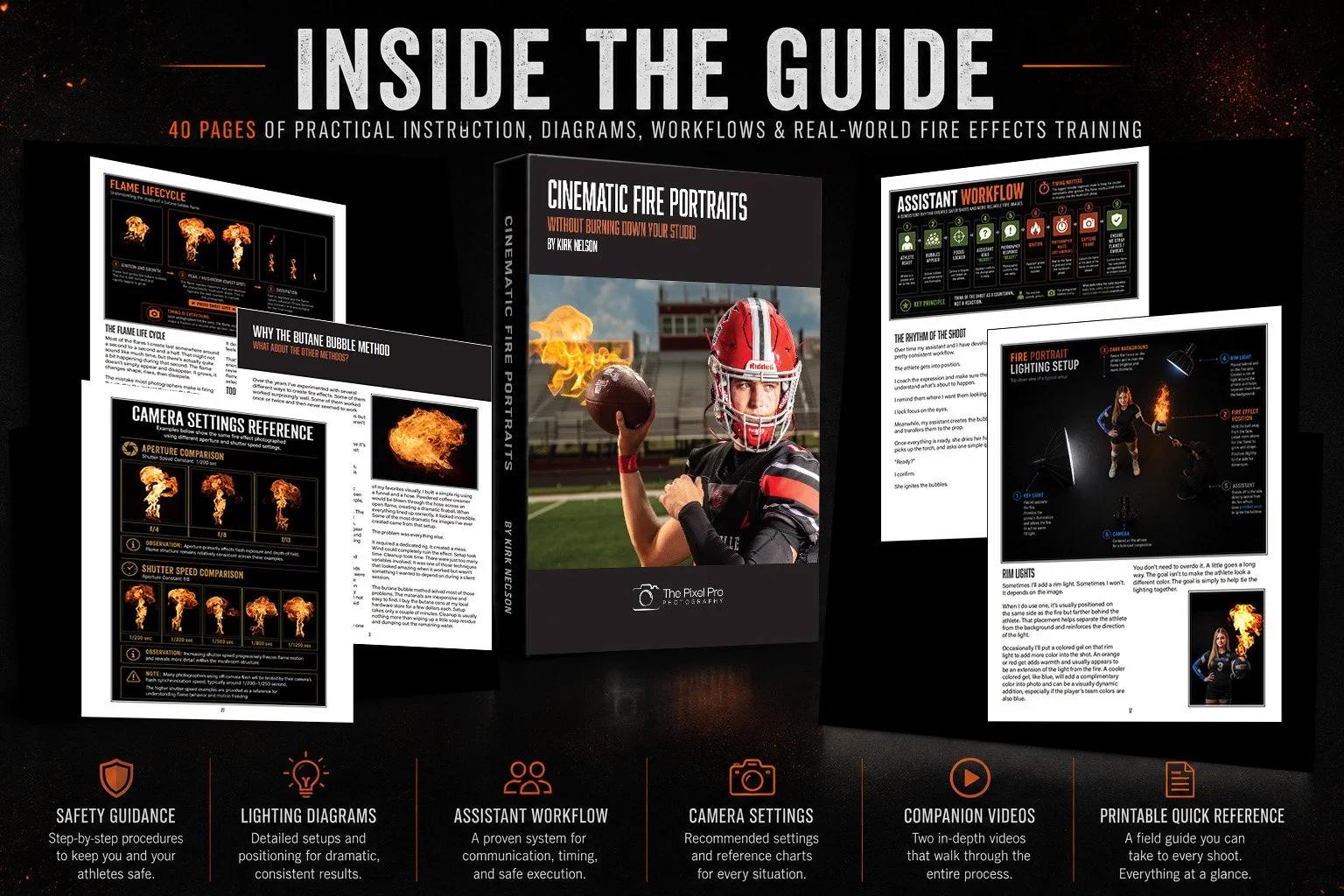
Inside the guide I cover:
• Safety procedures and risk management
• The practical fire effect I use
• Lighting setup and camera settings
• Understanding the flame lifecycle
• Assistant workflow and timing
• Common mistakes and troubleshooting
• Photoshop finishing techniques
• Companion training videos
If you've ever looked at one of these images and wondered how they were created, you can learn more here:
Because at the end of the day, you're not photographing fire.
You're photographing an athlete.
The fire is simply another tool that helps create something memorable.
